Johnny Depp is back on top of the box office. His new film Ebenezer, Paramount’s retelling of Charles Dickens’s A Christmas Carol, opened at number one in North America with an estimated $19 million, and took in $23 million internationally for a worldwide opening of $42 million. It is Depp’s first number one opening in eight years, and it arrives at a moment when many in Hollywood had written him off as a leading man. The numbers are modest by the standards of modern blockbusters, but the symbolism is enormous. A film about a miser who is given a second chance has become, improbably, the story of an actor given one too.
The choice of material is almost too perfect to be accidental. Ebenezer Scrooge is one of the most famous characters in English literature: a cold, lonely businessman who is visited by three ghosts on Christmas Eve and wakes on Christmas morning transformed. Depp has spent much of his career playing outsiders, eccentrics and misfits — Captain Jack Sparrow, Edward Scissorhands, the Mad Hatter — and Scrooge fits that pattern while also demanding something different. Scrooge is not a lovable weirdo. He is a man the audience is meant to dislike for most of the story, and then, in the final minutes, to love. That arc requires an actor who can be genuinely unpleasant and then genuinely moving, and Depp has always been at his best when a role asks him to hold two opposite things at once.
The commercial context matters as much as the artistic one. Depp was, for more than a decade, one of the biggest movie stars in the world. The Pirates of the Caribbean franchise alone earned billions, and his partnership with Tim Burton produced some of the most distinctive films of the 2000s. Then came the public collapse: a bitter divorce, a tabloid war, a libel trial in London that he lost, and a defamation trial in Virginia that he won but that left his reputation in tatters either way. Studios stopped calling. Disney, the company that had made him a fortune, moved on without him. For several years, Depp’s career seemed to exist mostly in European art films and in the headlines. Ebenezer is his first major Hollywood opening in years, and the fact that it reached number one at all is a statement — not only about Depp, but about what audiences are willing to forgive.
The box office figures deserve a closer look, because they tell a more complicated story than the headlines suggest. Nineteen million dollars in North America is a solid opening for a mid-budget drama, but it is not a blockbuster number. It is, however, a number that suggests something important: people came to see Depp, not the franchise. Ebenezer has no superheroes, no sequel hook and no built-in audience beyond the familiarity of the Dickens story itself. Its opening is a test of whether a star’s name still means anything in an era when franchises dominate the box office and audiences choose films by brand rather than by actor. The answer, at least this weekend, is that it still means something — especially when the star’s story mirrors the film’s story so neatly that the marketing almost writes itself.
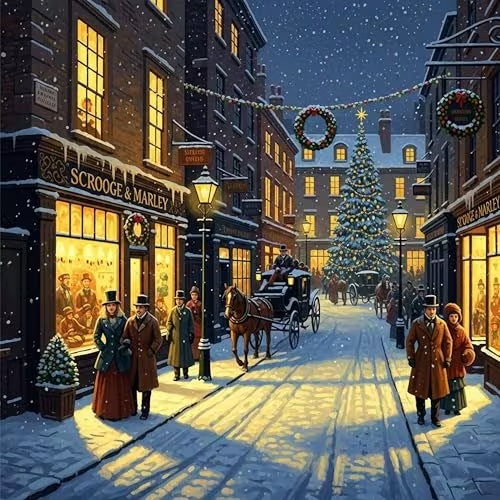
The Christmas movie market is also part of the story. A Christmas Carol has been adapted more times than almost any other story in English, from the Muppets to the BBC to a dozen forgettable television movies. That familiarity is both an advantage and a problem: audiences know the story by heart, so a new version has to justify its existence. Paramount’s bet is that Depp’s Scrooge, and a production that leans into the gothic darkness of Dickens’s London rather than the cosy sentimentality of most adaptations, will feel different enough to stand out. The early numbers suggest the bet is working, at least for now. Christmas films also have unusually long legs: if audiences embrace Ebenezer, it could play through December and well into the new year, turning a modest opening into a substantial total.
There is a wider question here about comebacks in general, and about what Hollywood does with stars it has discarded. The industry has always loved a redemption story, but it has also always been ruthless about who gets one. Depp’s return is not the same as every other comeback, because the reasons for his fall were so public and so contested. Some audiences will never watch him again. Others never stopped. The box office cannot settle that argument, but it can measure it, and the measurement so far is that enough people were curious, nostalgic or loyal to put his film at number one. That is not a verdict. It is an opening, and like Scrooge’s own story, it is only the beginning.
What happens next will depend on the film’s second weekend, which is always the real test of whether audiences liked what they saw or were simply curious. A steep drop would suggest the opening was driven by novelty and headlines. A gentle one would suggest genuine word of mouth, and the possibility of a long, profitable run through the holidays. It will also depend on whether studios take the result as a signal. One number one opening does not restore a career, but it does reopen a door that had been closed for years. If Ebenezer holds, expect the offers to follow — and expect the conversation about Depp to shift from what happened to him to what he does next. For an actor who has spent years as a cautionary tale, that shift alone is a kind of Christmas miracle.
Paramount’s gamble also deserves credit, because the studio could easily have chosen a safer path. A Christmas Carol is public domain, which means any studio can adapt it for free — and many have, with results ranging from beloved to unwatchable. What Paramount understood is that the story’s familiarity is not a weakness but a strength, provided the production finds a fresh angle. By casting an actor whose own life has been a public drama of fall and possible redemption, the studio turned a nineteenth-century ghost story into a twenty-first-century conversation. Whether that conversation continues into December will be decided by audiences, one ticket at a time, but the opening weekend has already proved the central point: Johnny Depp can still open a film, and the audience that once made him a star has not entirely gone away.
Sources: The Monochrome Chronicles, 16 November 2026; AnewZ, 16 November 2026.