
Toy Story 5 opened to $160 million, a franchise record, and the number tells a story that goes far beyond one film. Thirty-one years after the first Toy Story changed animation forever, the toys are still the biggest draw in cinema. Woody, Buzz Lightyear and the gang have now headlined five films across three decades, and the fifth has opened bigger than any of them. In a year when Hollywood has worried endlessly about the death of the theatrical experience, the failure of original films and the dominance of streaming, the toys have delivered a simple message: audiences will still come to the cinema in enormous numbers, provided you give them something they already love.
The record is worth putting in context. The original Toy Story, released in 1995, was the first feature film made entirely with computer animation, and it earned $373 million worldwide — a huge number at the time, and a revolution in how films were made. Toy Story 2 followed in 1999, Toy Story 3 in 2010 earned more than a billion dollars, and Toy Story 4 in 2019 did the same. Each film was supposed to be the last. Each time, Pixar found a reason to return, and each time the audience returned with it. The fifth film’s $160 million opening is not just a record for the franchise. It is a record for the idea that a series can keep growing after thirty years, provided the films themselves keep earning the audience’s trust.
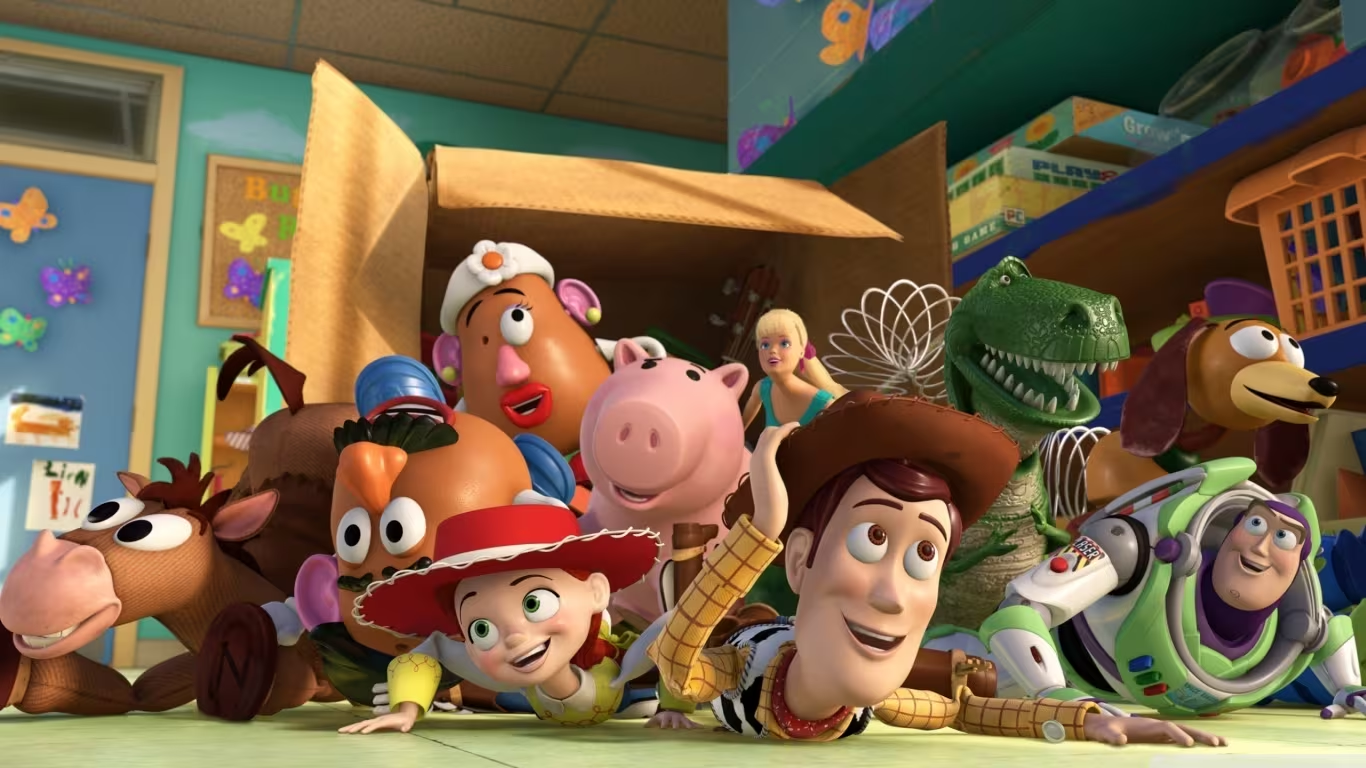
That trust is the real story. Pixar’s reputation was built on a simple promise: that a film about toys, or fish, or robots, or emotions, would be made with the same care as a film about people, and would treat its audience — children and adults alike — as intelligent. That promise has been tested in recent years. Pixar has had genuine disappointments, films that underperformed at the box office or were sent straight to streaming, and the studio’s parent company Disney has faced questions about whether its animation division still has the magic. Toy Story 5 answers those questions in the most direct way possible: with a number so large that it silences the doubters, at least for now. The opening also matters because animation is the most expensive and time-consuming form of filmmaking, with each film taking years of work from hundreds of artists. A record opening does not just reward the film. It rewards the entire craft, and it tells studios that audiences will still pay for animation made at the highest level, in a theatre, on a big screen, rather than waiting to watch it at home.
The opening also fits into a wider pattern in the 2026 box office, where the biggest successes have been films that audiences already had a relationship with. In India, Ramayana: Part 1 passed Jawan at the worldwide box office on its tenth day, reaching Rs 1,228 crore worldwide and Rs 819.50 crore gross in India alone — a film based on a 3,000-year-old epic, powered by an audience that had been waiting for it for years. In North America, Johnny Depp’s Ebenezer opened at number one on the strength of a story everyone already knew. The pattern is clear: in a crowded entertainment landscape, familiarity is the most valuable currency in cinema. Audiences are not rejecting new stories. They are choosing the stories they already care about, and they are choosing them in theatres, together, as an event.
That choice has consequences for the industry. The nostalgia economy — sequels, reboots, remakes and revivals — is now the dominant force in Hollywood, and Toy Story 5 is its most successful expression. The economics are straightforward: a known franchise is a safer investment than an original film, and in an era of expensive production and uncertain returns, studios prefer safety. The risk is that the industry stops taking chances, and that the next Toy Story — the original idea that becomes a thirty-year franchise — never gets made, because nobody is willing to fund it. Pixar itself was once that gamble. In 1995, a film made entirely by computer, about talking toys, was a radical bet. It paid off because someone took it. The question for Hollywood is whether the success of Toy Story 5 will encourage more bets like the one that created it, or simply more sequels to the bets that already paid off.Audiences
For audiences, the answer is simpler. Toy Story has always been about the fear of being outgrown and the hope of being remembered — the idea that the things we love as children stay with us, even when we grow up and put them away. That is why the films work for adults as well as children, and why the fifth film’s opening is so large: it is not only children buying tickets, but the adults who were children when the first film came out, bringing their own children to meet the toys they grew up with. The franchise is, in the end, a story about loyalty, and its audience has repaid that loyalty for thirty-one years. One hundred and sixty million dollars is a lot of money. It is also, in its way, a thank-you note — from an audience that has grown up with Woody and Buzz, and is not ready to say goodbye yet.
There is one more reason the opening matters, and it has nothing to do with money. Toy Story was the film that proved computer animation could carry a feature-length story, and every animated film since — from Shrek to Frozen to Spider-Verse — owes it a debt. A record opening for the fifth film is a reminder that the art form Pixar invented is still growing, still finding new audiences, and still capable of surprising the industry that it created. The toys have been on screen for thirty-one years, and they are not finished. As long as audiences keep showing up, neither is the idea that a story about loyalty, friendship and growing up can be the biggest film in the world…
Sources: The Monochrome Chronicles, November 2026; SVCZZ Entertainment Roundup, 15 November 2026.
Sources: The Monochrome Chronicles, November 2026; SVCZZ Entertainment Roundup, 15 November 2026.