The Asia-Pacific Economic Cooperation summit that closed in Shenzhen this week was, on paper, a routine gathering. APEC is the premier economic forum of the Asia-Pacific, a grouping of 21 member economies that together represent around 62 per cent of global GDP and are home to about 2.7 billion people — roughly 40 per cent of the world’s population. Its summits are usually exercises in careful consensus, producing communiqués full of promises about growth, sustainability and cooperation. But the 2026 summit, held in China’s southern technology hub on 18 and 19 November, was anything but routine. It became the stage for the most important argument in world economics: whether the open trading system that made Asia rich can survive the age of tariffs, export controls and great-power rivalry.
The central voice in that argument was Xi Jinping. The Chinese president used the opening of the summit to call for lower trade barriers, greater market openness and deeper regional cooperation, presenting China as a champion of globalisation. The message was deliberate, and it was aimed at a specific audience. For decades, the United States was the world’s great advocate of open markets, and China was the country accused of closing them. That alignment has now reversed. Washington, under Donald Trump, has spent the year imposing tariffs, tightening export controls on advanced technology and demanding that its allies choose sides in the contest over semiconductors and rare earths. Beijing, by contrast, is presenting itself as the defender of the system it once resisted. The irony is not lost on anyone in the region — least of all on the leaders who must now decide which version of the future to believe.
Shenzhen itself was part of the message. The city is China’s great symbol of what openness can achieve: a fishing village transformed in four decades into a metropolis of technology giants, a place where the world’s electronics are designed, manufactured and shipped. Hosting APEC there was a choice, and it was a pointed one. The summit’s backdrop was not a capital city or a diplomatic compound, but a living demonstration of the argument Xi was making — that trade, investment and openness produce prosperity, and that closing doors produces the opposite. The leaders who gathered in Shenzhen could see the evidence from their hotel windows.
The summit’s other great theme was the triangular relationship between the United States, China and Russia, and the shadow it casts over every economic discussion. Trump’s visit to Shenzhen was his third in-person meeting with Xi this year, and it came as the two countries seek an extended trade truce after months of tariff escalation. The American president arrived in China after a bruising midterm defeat at home and a week of summitry in Manila, and his presence in Shenzhen was itself a signal: whatever the rhetoric of rivalry, the world’s two largest economies cannot afford to stop talking. The trilateral meeting with Putin, held on the sidelines of APEC, underscored the point. Trade and security are no longer separate conversations. They are the same conversation, held in the same rooms, by the same leaders, on the same days.
For the smaller economies of the region, the summit posed a question that has no easy answer. APEC’s members include countries that depend on American security guarantees and Chinese markets at the same time, and the pressure to choose between them is growing. Washington’s new rules on the transfer of advanced AI chips, announced hours before Trump touched down in Manila, were a reminder of how quickly that pressure can arrive. The United States is also pressing Southeast Asian countries to join Pax Silica, its plan to build a complete mine-to-chip supply chain outside China’s control — an initiative that has already provoked months of protests in the Philippines, where a flagship 1,620-hectare AI manufacturing hub north of Manila threatens to displace Indigenous families. For the countries caught in the middle, the choice is not between openness and closure. It is between two different kinds of openness, each with its own costs.
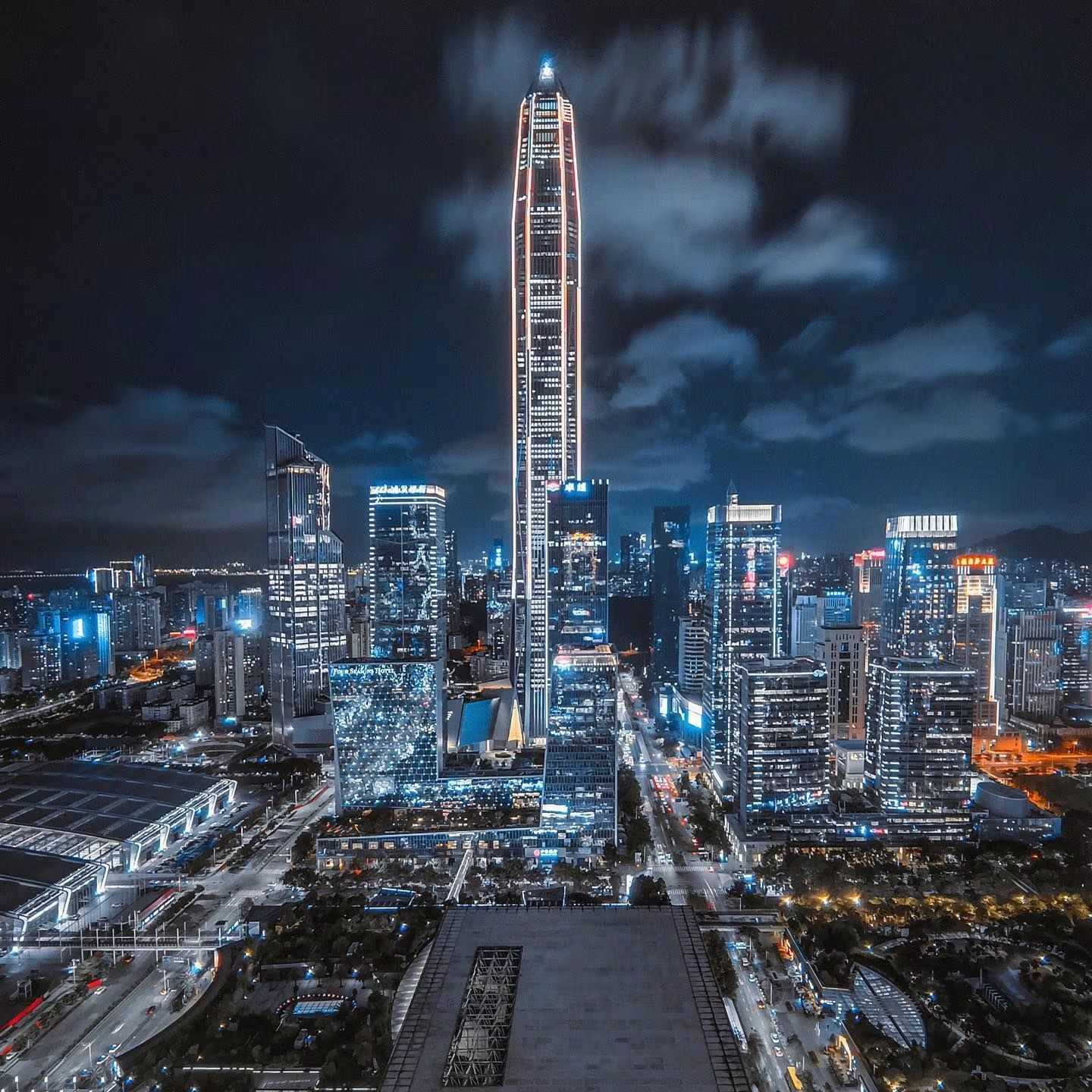
The economic stakes are enormous. APEC’s 21 economies include the world’s largest manufacturers, its largest markets and its fastest-growing middle classes. The rules they agree — or fail to agree — on trade, investment, digital commerce and supply chains will shape the global economy for a generation. The summit’s formal outcomes, as always, were modest: pledges of cooperation, commitments to sustainable growth, and language about an open and inclusive trading system. But the real outcome was the argument itself, conducted in public, between the world’s two largest economies, about who gets to define what openness means. That argument is not over. It will continue at the next summit, and the one after that, for as long as the global economy remains divided between those who want to keep it open and those who want to control it.
The summit also exposed how fragile the current trade truce really is. Trump’s visit to Shenzhen was aimed at extending the understanding reached with Beijing after months of tariff escalation, but a truce is not a settlement, and the issues that divide the two countries — technology controls, market access, industrial subsidies, and the vast bilateral trade imbalance — have not gone away. Hours before Trump landed in Manila, Washington announced new rules on the transfer of advanced AI chips, a move that could rankle ASEAN members who depend on the same supply chains. The message from the American side was that trade talks and technology controls would proceed on separate tracks, but in practice the two are inseparable. Every chip sold, every tariff imposed, and every supply chain rerouted is part of the same contest, and the APEC summit was where that contest was on full display.
There is a temptation to treat APEC as a talking shop, a forum whose communiqués are forgotten within days. That would be a mistake. The summit in Shenzhen mattered because it brought the defining question of the decade into the open: whether the world economy will remain a single system, or split into competing blocs. Xi’s answer was that openness is the future, and that China intends to lead it. Trump’s answer, delivered through tariffs and export controls, was that openness must be negotiated on American terms. The rest of the region, watching from the sidelines in Shenzhen, must now decide how to navigate between them. The 2.7 billion people who live in APEC’s member economies will feel the consequences of that decision in their jobs, their prices and their prospects. The summit is over. The argument has only just begun.
Sources: Firstpost, November 2026; Chosun Biz, 14 November 2026; Channel News Asia, 18 November 2026; Anadolu Agency, 19 November 2026.