On the evening of Thursday, 19 November 2026, Air Force One lifted off from Shenzhen Bao’an International Airport at 6:53 p.m. local time, carrying Donald Trump home at the end of a week that may be remembered as one of the most consequential in modern diplomacy. A band had played and an honour guard had lined the red carpet as the American president boarded his aircraft in the southern Chinese city. Behind him lay the first-ever trilateral meeting between the leaders of the United States, China and Russia — a three-way conversation between Trump, Xi Jinping and Vladimir Putin that was held on the sidelines of the Asia-Pacific Economic Cooperation forum and that some commentators immediately likened to a modern-day Yalta Conference. The comparison is deliberately provocative, but it captures the scale of what happened: the three most powerful men in the world sat down together, in one room, to discuss the wars, the weapons and the trade that will define the next decade.
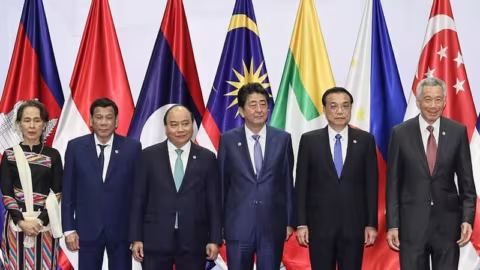
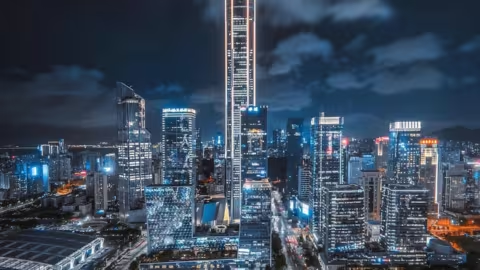
The meeting itself was the centrepiece of a frantic week of summitry. Trump had arrived in Asia for his first overseas trip since his party’s defeat in the midterm elections on 3 November, a bruising result that had stripped the Republicans of their majorities in both chambers of Congress. He began in Manila, where he attended the Association of Southeast Asian Nations summit and the first leader-level meeting of the Quad — the security partnership of the United States, Australia, India and Japan — in more than two years. From there he flew to Shenzhen, China’s southern technology hub, for the APEC leaders’ meeting, where the trilateral had been arranged. Putin arrived in China on Wednesday, 18 November, ahead of the summit. The three leaders then held separate bilateral meetings before coming together for the inaugural three-way session, a format that had been rumoured for days and confirmed only shortly before it happened.
According to the official accounts, the trilateral discussions addressed three subjects: nuclear arms reductions, the Russia-Ukraine war and the Iran war. Each of those topics alone would justify a summit. Taken together, they represent the full agenda of great-power politics in 2026. Nuclear arms control has been in limbo for years, with the old treaties expiring or collapsing and no new framework to replace them. The war in Ukraine, now in its fifth year, has become a grinding conflict that neither side can win outright and neither side can afford to lose. And the Iran war — the conflict that has driven up oil prices, rattled currency markets across Asia and forced Southeast Asian governments to scramble for energy supplies — has become the most urgent crisis on the global agenda. That all three were discussed in a single meeting, by the three leaders whose decisions matter most, is itself a statement about the direction of world politics.
The reactions were swift and sharply divided. Supporters of the meeting argued that the world’s most dangerous problems cannot be solved without the three great powers talking to each other, and that a trilateral format is more honest than the pretence that one of them can be ignored. Critics warned that the format itself was the problem: a three-way meeting between Washington, Beijing and Moscow, held without the Europeans, without the Ukrainians and without the other countries most affected by the wars under discussion, risks looking like a carve-up rather than a negotiation. That criticism found its sharpest expression in Kyiv. Ukrainian President Volodymyr Zelenskyy said publicly that the United States should not make decisions about Ukraine without Ukraine’s involvement, and Trump responded to that statement directly during his Asia tour. The exchange captured the central tension of the new diplomacy: the great powers are talking, but the countries whose futures are being discussed are not always in the room.
The Yalta comparison, made by several commentators during the week, is worth examining rather than simply repeating. The original Yalta Conference, held in February 1945, brought together Roosevelt, Churchill and Stalin to decide the shape of post-war Europe, and it has been remembered ever since as both a triumph of diplomacy and a betrayal — a meeting where the fate of nations was settled over the heads of the people who lived in them. The Shenzhen trilateral is not Yalta in any literal sense: the world of 2026 is multipolar in a way that 1945 was not, and the presence of China as an equal partner changes the geometry entirely. But the comparison captures something real about the anxiety the meeting produced. When three leaders meet behind closed doors to discuss wars and weapons, the rest of the world is entitled to ask what was agreed, and on whose behalf.
What was actually agreed remains, for now, unclear. No joint statement with detailed commitments emerged from the meeting, and the public accounts were thin. Trump, speaking before his departure, said he would hold a news conference at the White House on Friday at noon, and that he would be discussing trade deals with Thailand, the Philippines and other countries. The absence of specifics is not unusual for a first meeting of this kind — the significance may lie less in what was decided than in the fact that the meeting happened at all. A trilateral format, once established, creates a precedent. If Trump, Xi and Putin meet once, they can meet again, and the second meeting will be easier to arrange than the first. The architecture of great-power diplomacy may have shifted, quietly, in a single afternoon in Shenzhen.
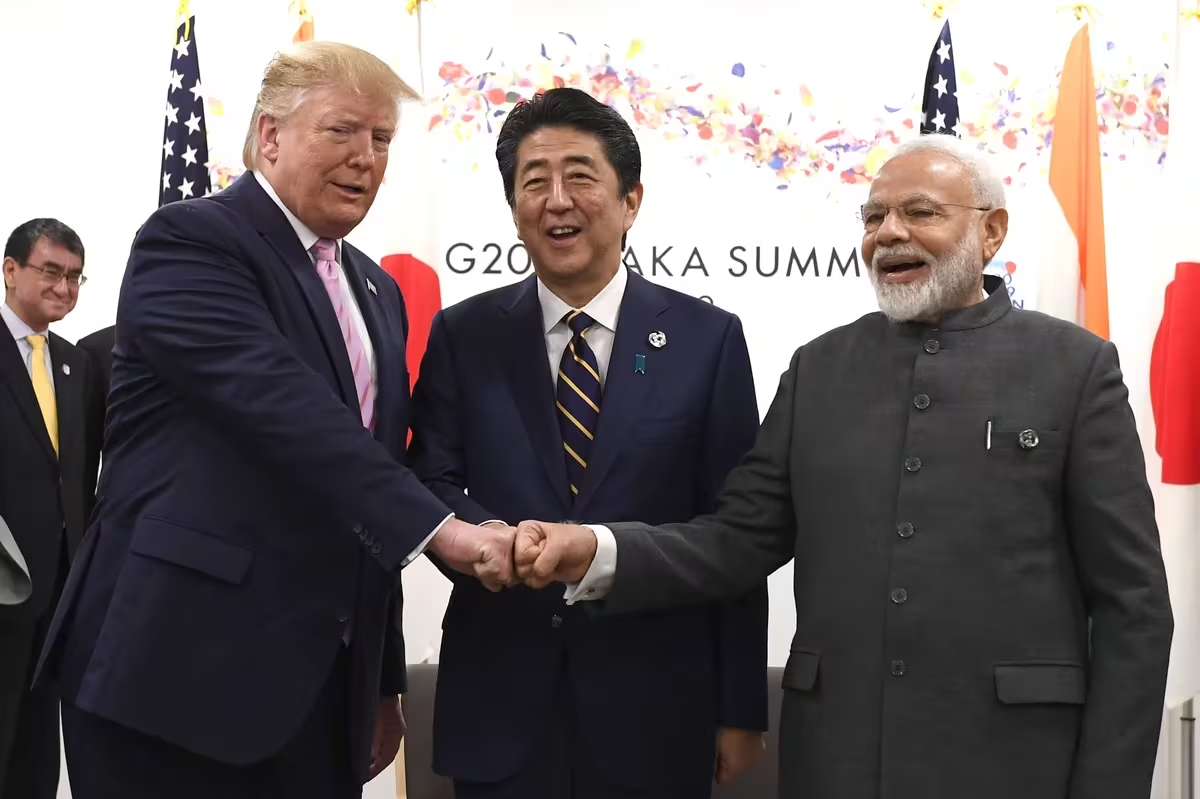
The wider context matters too. Trump’s Asia tour was his first overseas trip since the midterm defeat, and it was explicitly framed as a search for diplomatic gains after a bruising election result at home. The Quad meeting in Manila, the APEC summit in Shenzhen and the trilateral with Xi and Putin were all part of the same effort: to show that the president could still command the world stage, even as his domestic position weakened. Whether that effort succeeded will be judged over the coming months, by what follows the handshakes. But the images from the week — the marching band and honour guard in Manila, the red carpet in Shenzhen, the three leaders in a single frame — have already entered the visual record of the decade.
For the rest of the world, the lesson of Shenzhen is that the old rules of diplomacy are being rewritten in real time. The post-Cold War order, in which the United States set the agenda and others responded, has given way to something messier and more contested. China now hosts the summits and sets the terms of the conversation. Russia, isolated by war and sanctions, is back at the table. And the United States, even in a weakened domestic position, remains the indispensable partner in any serious negotiation. The trilateral did not resolve any of the wars it discussed. It did something else: it announced that the world’s three great powers intend to talk to each other directly, in public, about the issues that matter most. The world will be watching what they do next — and, just as importantly, who they leave out of the room.
Sources: Anadolu Agency, 19 November 2026; Channel News Asia, 18 November 2026; Firstpost, November 2026; The Financial Express, November 2026.