There is a war going on that most of the world experiences not through headlines about battles, but through the price of petrol, the value of a currency and the cost of a loan. The Iran-US war, which has dominated the strategic agenda of 2026, is rarely described in the economic pages as what it is: the single largest shock to the global economy this year. But its fingerprints are everywhere. It is the reason Southeast Asian countries are scrambling for oil and energy supplies. It is the reason oil prices have stayed elevated for months. It is the reason Indonesia’s rupiah has lost 8.4 per cent of its value this year and its central bank was forced to raise interest rates to 6 per cent. And it is the reason the leaders who gathered in Manila and Shenzhen this week spent as much time talking about energy as they did about trade. The war is fought in the Middle East. Its consequences are felt in every petrol station, every market and every household in Asia.
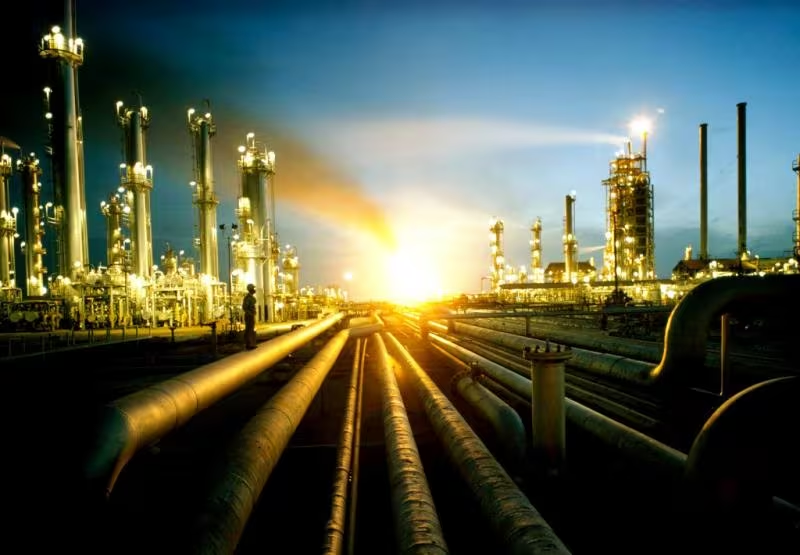
The mechanism is brutally simple. War in the Middle East means uncertainty about oil, and uncertainty about oil means higher prices. The region produces a large share of the world’s crude, and any threat to its shipping lanes, its refineries or its exports sends traders scrambling for cover. Higher oil prices then ripple outward through every economy that imports energy — which is to say, almost every economy in Asia. Indonesia, the world’s fourth most populous country, subsidises fuel for its citizens, so every dollar added to the price of crude adds directly to the government’s budget deficit. The same arithmetic applies, in different forms, across the region: higher transport costs, higher food prices, higher inflation, and central banks forced to choose between raising rates to defend their currencies and keeping rates low to support growth. Bank Indonesia chose to raise rates. Other central banks face the same choice, and none of them has a good option.
The currency channel is just as powerful as the oil channel. When war breaks out, investors move their money to safety — to the US dollar, to American government bonds, to assets that are perceived as secure. That flight to safety pushes the dollar up and pushes emerging-market currencies down, and the effect is amplified when the Federal Reserve is also expected to raise interest rates. The rupiah’s slide to around 18,250 per dollar, near historic lows, is the visible result of that dynamic. But Indonesia is not alone. Across Southeast Asia, currencies have come under pressure, stock markets have wobbled, and foreign investors have sold local assets. Bank Indonesia explicitly cited foreign investor selling in the stock market as a source of pressure on the rupiah, alongside global uncertainty. The war has made investors nervous, and nervous investors do not wait to see how things turn out. They leave.
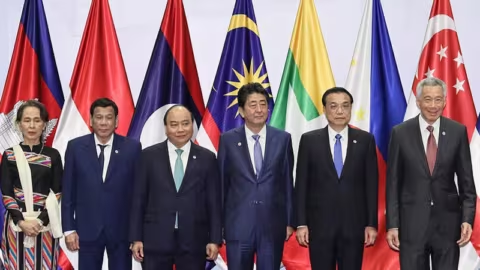
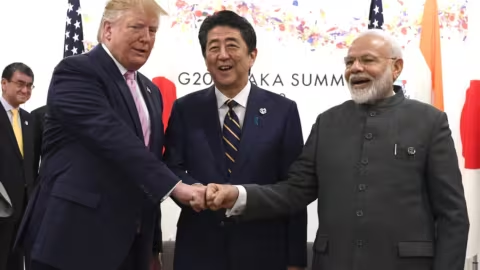
The political consequences are already visible in the summitry of this week. At the ASEAN summit in Manila, from 15 to 17 November, the main focus was the Iran war and its effect on energy supplies, as Southeast Asian countries scrambled to secure the oil they need to keep their economies running. The leaders of the 11-member bloc — a group that includes Indonesia, Vietnam, Thailand and the Philippines — spent three days grappling with a raft of regional issues, but the spectre of the war loomed over every discussion. The same war dominated the trilateral meeting between Trump, Xi Jinping and Vladimir Putin in Shenzhen, where it was one of only three subjects on the agenda, alongside nuclear arms reductions and the war in Ukraine. When the world’s three most powerful leaders devote a meeting to a war, it is a measure of how far its consequences have spread.
There is a cruel irony in the timing. The world economy in 2026 was already fragile before the war escalated. Global growth is projected to reach just 3.1 per cent this year, according to Bank Indonesia, while inflationary pressures are expected to remain high at around 4.6 per cent. The artificial intelligence boom has pushed stock valuations to levels that central bankers themselves describe as excessive, and the prospect of a correction hangs over financial markets. Into this fragile environment, the war has injected the one thing it could least afford: a sustained shock to the price of the commodity on which everything else depends. The result is a global economy that is growing slowly, inflating persistently and exposed to a geopolitical risk that no central bank can control.
The countries most exposed are the ones with the least room to manoeuvre. Indonesia’s response — raising rates, promoting biodiesel from B50 to B60 and ethanol under the E10 and E20 programmes to reduce reliance on imported energy — is a long-term strategy dressed up as an emergency measure. It will take years for those programmes to change the country’s energy balance, and the war is happening now. In the meantime, the government must pay the subsidy bill, the central bank must defend the currency, and ordinary Indonesians must pay more for fuel, food and transport. The same story, with local variations, is playing out across the region: governments absorbing costs they cannot afford, central banks raising rates they do not want to raise, and households paying prices they did not choose.
The war’s economic shadow will not lift quickly, even if the fighting stops. Oil markets remember shocks long after they end, and the premium that traders attach to Middle Eastern supply will persist. The fiscal damage — wider deficits, higher debt-servicing costs, depleted reserves — will take years to repair. And the strategic lesson will endure: that the global economy, for all its talk of diversification and resilience, still depends on a single region for its energy, and that a war in that region can reach into the life of a farmer in Java, a commuter in Manila or a factory worker in Bangkok within weeks. The leaders in Manila and Shenzhen understand this. The question is whether they can do anything about it — and the answer, for now, is that they are trying, with interest rates, with stockpiles, with diplomacy, and with the hope that the war ends before the damage becomes permanent.
Sources: Firstpost, November 2026; Asia News Network, 19 November 2026; IDN Financials, November 2026; ASEAN Coverage, November 2026; Indonesia Investments, 18 November 2026.