The Cincinnati Bengals beat the Atlanta Falcons 34-17 at the Santiago Bernabéu in Madrid, and American football took another step in its conquest of the world. Joe Burrow and Ja’Marr Chase starred for the Bengals in a game played in one of the most famous football stadiums on the planet — the home of Real Madrid, a cathedral of the other kind of football, now hosting a sport that most Spaniards had never seen live before. The result was a comfortable win for Cincinnati. The significance was much larger than the scoreline: the NFL has now played a regular-season game in Spain, and the league’s global expansion has reached a point where no market feels out of reach.
The Bernabéu is a deliberate choice, and it says everything about the NFL’s ambitions. The stadium, rebuilt at enormous cost into one of the most modern venues in world sport, is designed to host events far beyond football — concerts, boxing, and now American football. The NFL has been playing games in London since 2007, and has since added Germany, Brazil and now Spain to its list of host countries. Each new market follows the same pattern: a regular-season game, played in a famous stadium, marketed as an event rather than just a fixture, and designed to create a local fanbase that will follow the league long after the teams have flown home.
Burrow’s performance was the other story of the weekend, and it extended beyond Madrid. The Bengals quarterback threw for 409 yards and four touchdowns without an interception as Cincinnati beat Pittsburgh, and then starred again at the Bernabéu — a run of form that has re-established him as one of the best quarterbacks in the league after a difficult period. Burrow’s career has been defined by resilience: a Heisman Trophy at LSU, a Super Bowl appearance in his second season, and then injuries and setbacks that would have derailed a less determined player. His connection with Chase, his college teammate and now his most trusted receiver, remains one of the most productive partnerships in the NFL, and in Madrid it was on full display. When the two of them are healthy and in rhythm, the Bengals can beat anyone, anywhere — including in a stadium built for a different sport, in front of a crowd that had come to see something new.

The rest of the NFL weekend offered its own drama. Patrick Mahomes threw five touchdowns to ease concerns about his elbow in Kansas City’s rout of Atlanta, a reminder that the league’s biggest star is still capable of performances that defy belief. San Francisco piled up 584 yards against Dallas, and the Cowboys’ second-half defensive collapse left head coach Brian Schottenheimer saying he was very frustrated. Aaron Donald recorded his first sack since New Year’s Eve 2023 in a Rams win, a milestone for a player who has defined defensive excellence for a decade. Deshaun Watson led Cleveland to a comeback over his former Texans team, his sixth game-winning drive of the season. Jordan Love was sacked eight times in Green Bay’s 30-10 home loss to Minnesota, a night to forget for the Packers. The league is, as ever, a weekly drama of comebacks, collapses and records.
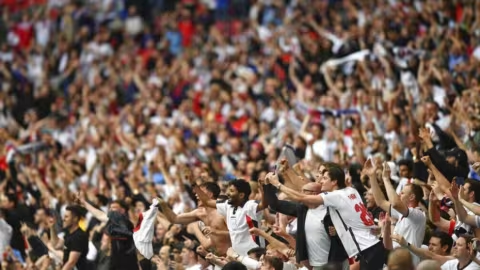
But the Madrid game is the story that will last, because it represents a structural shift in the sport. The NFL has long been the richest league in the world, but it has also been the most American — a sport that the rest of the world watched from a distance, if at all. The international games are changing that, and the league’s ambitions are now explicit: more games abroad, more markets, and eventually, perhaps, a franchise outside the United States. The obstacles are real — time zones, travel, player welfare, and the simple fact that American football is a complicated sport to explain to a new audience. But the NFL has money, patience and a product that, once seen live, converts sceptics into fans with remarkable efficiency. The Bernabéu crowd, many of whom had never seen a live NFL game before, left as believers. That is how empires are built, one stadium at a time, and Madrid is only the latest stop on the tour.
For the Bengals, the win is a step towards the playoffs. For the Falcons, the defeat is a setback in a season that has already had too many. For the NFL, the Madrid game is something else entirely: proof that American football can fill the most famous stadium in Spain, in a country where the sport barely existed a decade ago, and that the league’s global future is not a dream but a plan already in motion. The next stop is unknown. The direction is not. What happened at the Bernabéu will be remembered as the night the NFL stopped being an American curiosity in Spain and became a live event that tens of thousands of people paid to see, in person, under the lights.
The Madrid experiment also shows how much the business of sport has changed. A decade ago, the idea of playing a regular-season NFL game in Spain would have seemed absurd — the sport was too American, too complicated, too dependent on a domestic television audience that no other country could match. Today, the league’s international games are among its most valuable assets, because they open new markets for merchandise, broadcasting rights and sponsorships in countries where the NFL’s growth potential is far greater than it is at home. The Bernabéu game was not just a football match. It was a trade mission, a marketing campaign and a television event rolled into one, and by every measure that matters to the league — attendance, atmosphere, global attention — it worked. The fans who filled the Bernabéu did not need to understand every rule to enjoy the spectacle. They understood the drama, the noise and the sense of occasion, and that is all any sport needs to win new supporters. The NFL has learned that lesson well, and Madrid is the proof.
Sources: HeadlinesBriefing Sports, 8–16 November 2026.