Fashion is a circle, and the seventies are back. Flared trousers, bold prints, corduroy, suede, platform shoes and earth tones are everywhere again — on runways, on the street, in the shops — and the decade that was once the butt of every fashion joke is now the reference point for an entire generation. This is not the first time the seventies have returned, and it will not be the last. The decade has been revived so often that it has become less a period in history than a permanent ingredient in the fashion vocabulary. But this revival feels different, because it is not just about nostalgia. It is about what the seventies represent: freedom, colour, texture and a refusal to be boring. In a world of minimalism and monochrome, the seventies are a reminder that clothes can be fun.
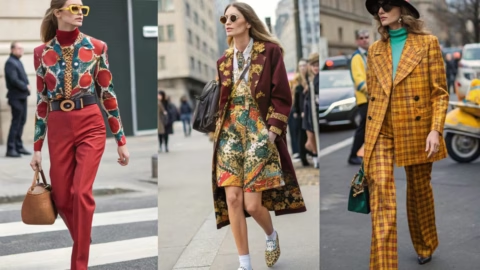
The first thing to understand about the seventies is that it was not one look. It was at least three. There was the bohemian look: flowing fabrics, floral prints, suede waistcoats, floppy hats and the free-spirited style of the festival and the commune. There was the disco look: metallic fabrics, jumpsuits, platform shoes, wide collars and the glittering excess of the dance floor. And there was the tailored look: wide-lapelled suits, flared trousers in wool and corduroy, turtlenecks and leather jackets — the style of the decade’s film stars and rock musicians. These three looks shared a silhouette — wide at the bottom, bold at the top — but they were worn by very different people for very different reasons. The modern revival borrows from all three, and the skill is in choosing which one speaks to you.
The flared trouser is the centrepiece of the revival, and it is the item that most people get wrong. The flare is not a costume. It is a shape, and like any shape, it works when it is in proportion. The rule is simple: the flare should start at the knee, not at the thigh, and it should be wide enough to balance the shoulder but not so wide that it swallows the shoe. Pair flares with something fitted on top — a tucked-in shirt, a cropped jacket, a slim knit — so that the volume is in one place and the rest of the outfit is clean. Wear them with a shoe that has some height, because a flare that drags on the ground looks careless rather than relaxed. And choose the fabric carefully: denim flares are the most versatile, corduroy flares are the most seventies, and wool flares are the most elegant. One pair, worn well, is enough. Two pairs is a collection. Three is a costume.
Prints are the second element of the revival, and they require the same discipline. The seventies loved bold patterns: oversized florals, geometric shapes, paisley, stripes in colours that had no business being together and somehow worked. The modern way to wear them is to let one print do the work. A floral shirt with plain trousers. A patterned jacket with a simple T-shirt underneath. A bold scarf with a neutral coat. The mistake is to combine two strong prints, which creates a visual argument rather than an outfit. The colours, too, deserve attention: the seventies palette was built on earth tones — mustard, rust, olive, chocolate, camel — and these colours are the reason the revival works so well today. They are warm, they suit most skin tones, and they pair naturally with denim, leather and suede. A mustard knit, a rust scarf, an olive jacket: these are seventies colours that do not look like a costume, because they are simply good colours.
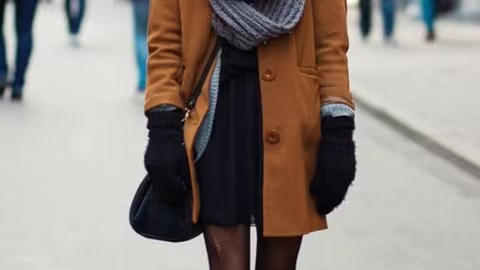
Texture is the third element, and it is the one that makes the seventies revival feel rich rather than retro. Corduroy, suede, velvet, shearling and chunky knitwear were the fabrics of the decade, and they are the fabrics that give a modern outfit its depth. A corduroy jacket over a plain shirt. A suede boot with dark jeans. A shearling collar on a winter coat. A chunky knit in a warm colour. Each of these is a seventies reference, but none of them looks like fancy dress, because each of them is also simply a good, practical choice for cold weather. The trick is to use one textured piece at a time, and to let the rest of the outfit be smooth and simple. Texture is seasoning: a little transforms the dish, too much ruins it.
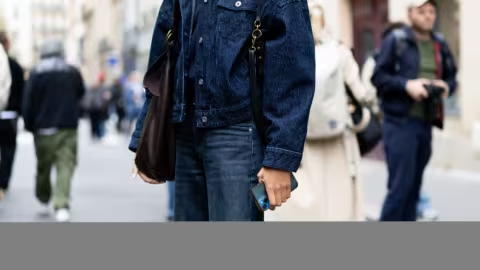
The question that every revival raises is the same: how do you wear a look from the past without looking like you are in costume? The answer has three parts. First, wear one seventies piece at a time, not the whole decade at once. A pair of flares with a modern shirt. A seventies print with contemporary trousers. A suede jacket with jeans. Second, keep the rest of the outfit current: modern shoes, a modern bag, a modern haircut. The contrast between the vintage piece and the contemporary styling is what makes the outfit look intentional rather than nostalgic. Third, and most importantly, wear it because you like it, not because it is fashionable. The seventies revival will pass, as every revival does. The pieces that survive it will be the ones that were good on their own merits — the flares that fit, the print that suited you, the jacket that became a favourite. Those are the pieces worth keeping, and they are the reason the seventies keep coming back: not because fashion is out of ideas, but because some ideas were good enough to last.
It is also worth remembering that the seventies revival is part of a larger shift in how fashion works. For most of the twentieth century, trends moved in one direction: new replaced old, and old was forgotten. Today, the past is always available — in vintage shops, in online marketplaces, in the archives of every major brand — and the most stylish people are often the ones who mix decades rather than following a single one. A seventies jacket with nineties jeans and a modern shoe is not a costume. It is a personal style, built from the best of every era, and it is the direction fashion is heading. The seventies are back, but they are not back alone. They are back as one ingredient in a wardrobe that belongs to you, and that is exactly how they should be worn.