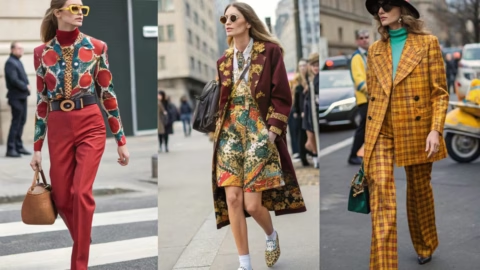
An outfit is never finished when the clothes are on. It is finished when the details are right, and the most important detail of all is the one on your wrist. A watch is the only piece of jewellery most men wear every day, and it is the accessory that says more about its owner than any other single item. It tells people whether you care about craft, whether you value tradition or technology, whether you are the kind of person who notices small things. In a world where the time is available on every phone, every screen and every wall, wearing a watch is a choice — and like all choices in style, it is a choice that communicates something. The same is true of every accessory: the belt, the bag, the glasses, the ring. Clothes make the outfit. Accessories make the person.
The watch deserves to be taken seriously because it is, quite simply, the oldest and most personal accessory in menswear. For more than a century, a man’s watch has been a marker of who he is and where he stands. A steel sports watch suggests an active life. A slim dress watch suggests formality and restraint. A vintage watch suggests someone who values history over novelty. A smartwatch suggests someone who values function over tradition — and that, too, is a statement. There is no right answer, but there is a wrong one: wearing a watch that does not fit your life. A chunky dive watch with a dinner suit looks confused. A delicate dress watch at the gym looks absurd. The watch should match the day you are having, and if you own only one, make it the watch that matches most of your days: a clean, simple design in steel, with a dark dial and a strap that works with both a suit and a shirt.
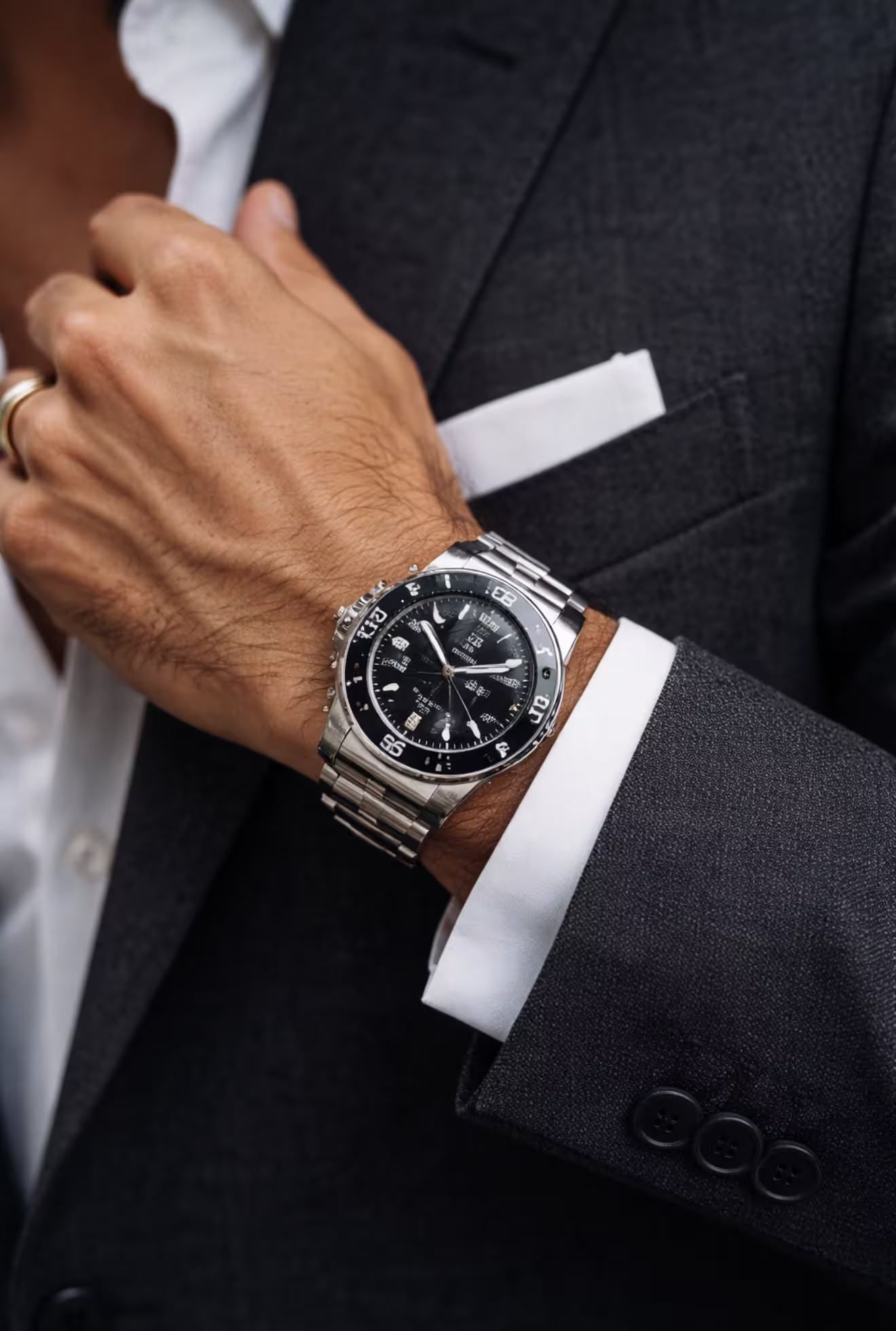
The strap matters as much as the watch itself, and it is the easiest way to change the character of a timepiece. A steel bracelet is the most versatile option — it works with almost everything, it lasts for decades, and it suits both formal and casual settings. A leather strap is warmer and more traditional: black leather for formal occasions, brown leather for everything else. A fabric or rubber strap is for weekends, holidays and sport. The rule is to match the strap to the occasion, and to match the metal of the watch to the other metals you are wearing: the buckle of your belt, the frame of your glasses, the ring on your finger. This sounds fussy, and it is — but it is the kind of fussiness that other people notice without knowing why. A man whose metals match looks put together. A man whose do not looks like he got dressed in the dark.
Beyond the watch, the other accessories follow the same principle: less is more, and quality beats quantity. A belt should be good leather, in a colour that matches your shoes, with a buckle that is simple rather than flashy. A bag should be the right size for the day — a slim briefcase or messenger for work, a backpack for travel, a small crossbody for a day out — and it should be made of a material that improves with age. Glasses, for those who wear them, are the most visible accessory of all, because they sit on your face: choose a frame that suits your face shape, and remember that glasses are the one accessory people will see in every photograph of you. A ring, if you wear one, should be simple and meaningful. A bracelet, if you wear one, should be the only bracelet. The pattern is consistent: one of each thing, chosen well, worn with confidence.
There is a temptation, particularly for people who are new to accessories, to buy many cheap things rather than a few good ones. This is almost always a mistake. A single good watch, worn every day for ten years, costs less per wear than a drawer full of fashion watches that break, tarnish or go out of style. The same is true of a belt, a bag or a pair of sunglasses. Accessories are the items in your wardrobe that you touch and use every day, and their quality is something you feel constantly — the weight of a well-made watch, the smoothness of good leather, the balance of a well-made pair of glasses. Cheap accessories announce themselves in the hand before anyone sees them. Good ones do not need to announce anything.
The deeper point is that accessories are where personal style lives. Clothes are, to a large extent, determined by the occasion: a suit for a wedding, a shirt for the office, jeans for the weekend. Accessories are where you make those clothes yours. The watch your grandfather gave you. The leather strap you chose because you liked the colour. The bag you have carried for five years and that bears the marks of every trip you have taken. These are the things that turn an outfit into a signature, and a signature into an identity. Fashion changes every season. The watch on your wrist, if you choose it well, will outlast every trend, and it will say something about you long after the clothes have been forgotten. That is why the details matter — and why the smallest thing you wear is often the most important.
There is one more accessory that deserves a mention, because it is the one most people forget: sunglasses. A good pair of sunglasses is not just protection from the sun. It is the frame for your face in the brightest months of the year, and the wrong pair can undo an otherwise perfect outfit. The rule is the same as for glasses: choose a shape that suits your face, keep the lenses dark enough to be useful, and buy the best quality you can afford, because cheap sunglasses with poor lenses do real damage to your eyes. A classic shape — an aviator, a wayfarer, a round frame — will never go out of style, and it will work with everything from a suit to swim shorts. Like the watch, the sunglasses are a small thing that carries a large message: that you pay attention, that you care about the details, and that you understand style is not about what you wear but about how you wear it.